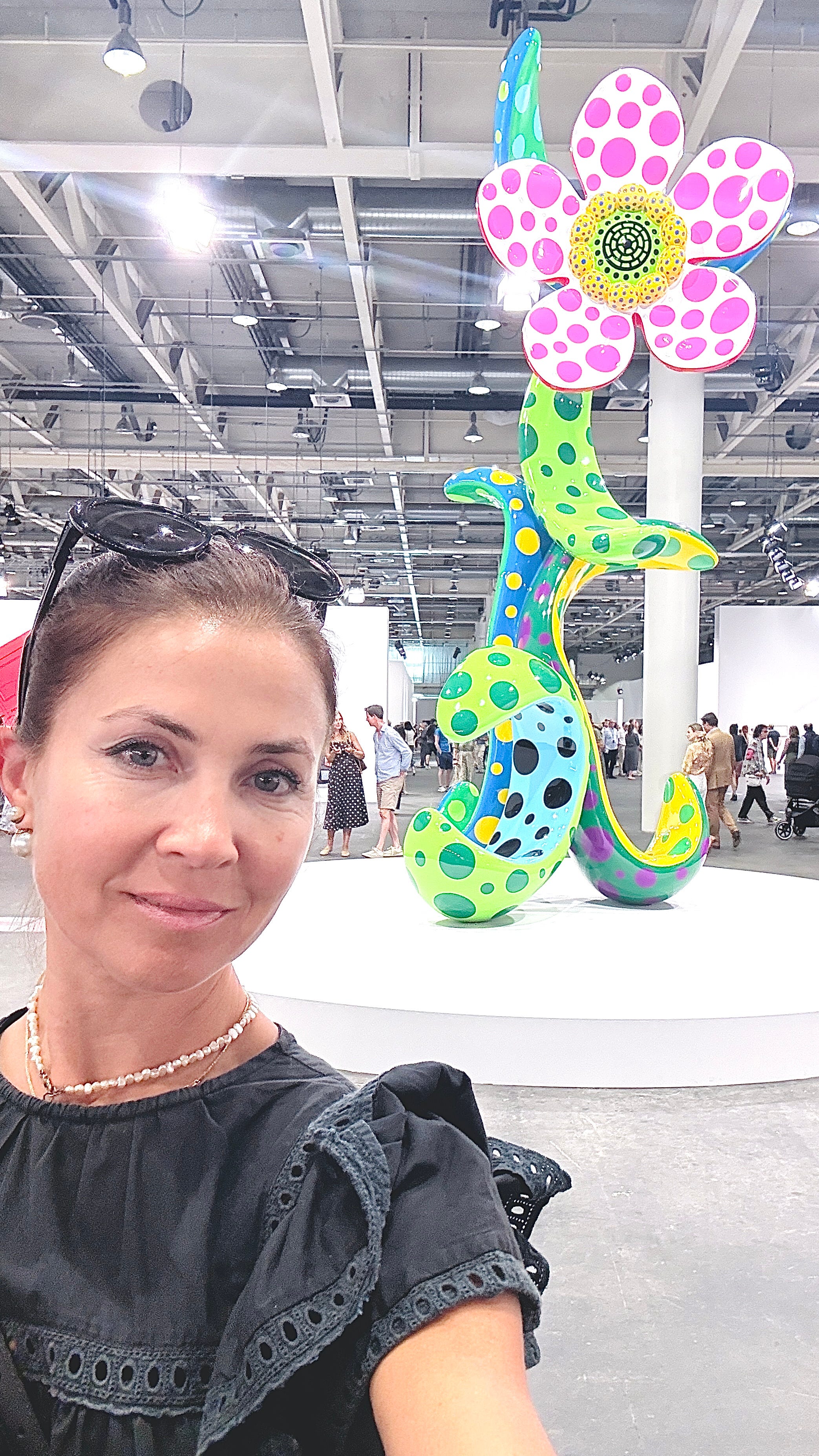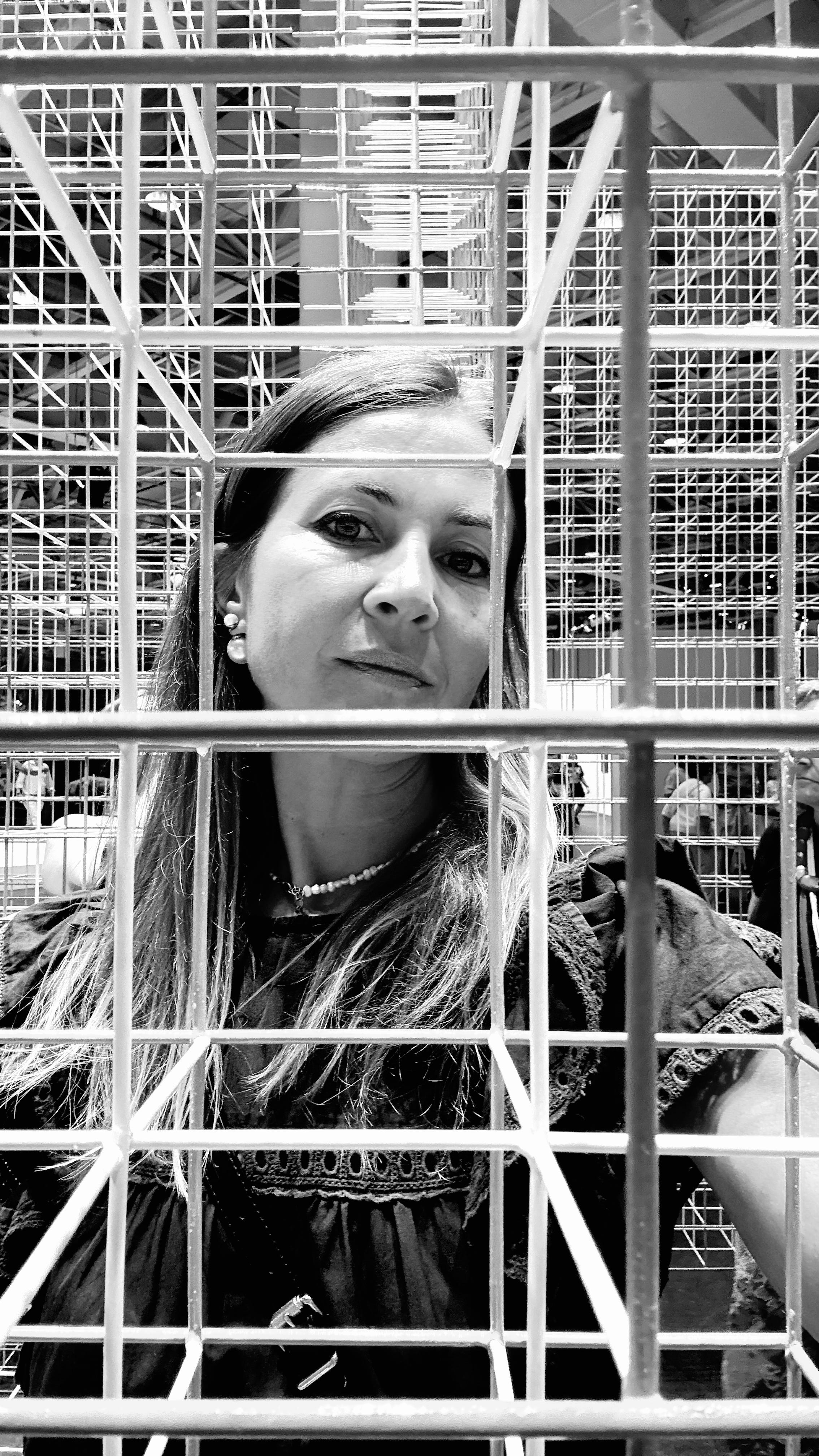
I arrived as a photographer.
Not as a collector, not as a gallerist, not as someone with a briefcase and an appointment. I came with the habit of noticing what others walk past.
Outside, in the June heat of Basel, 34 degrees, relentless, hundreds of people were already waiting before the doors opened. Queues stretched across the plaza, a river of linen, sunglasses and anticipation. Its scale hit me before I even stepped inside. This was not simply an art fair. It was an event. A market. A spectacle unto itself.
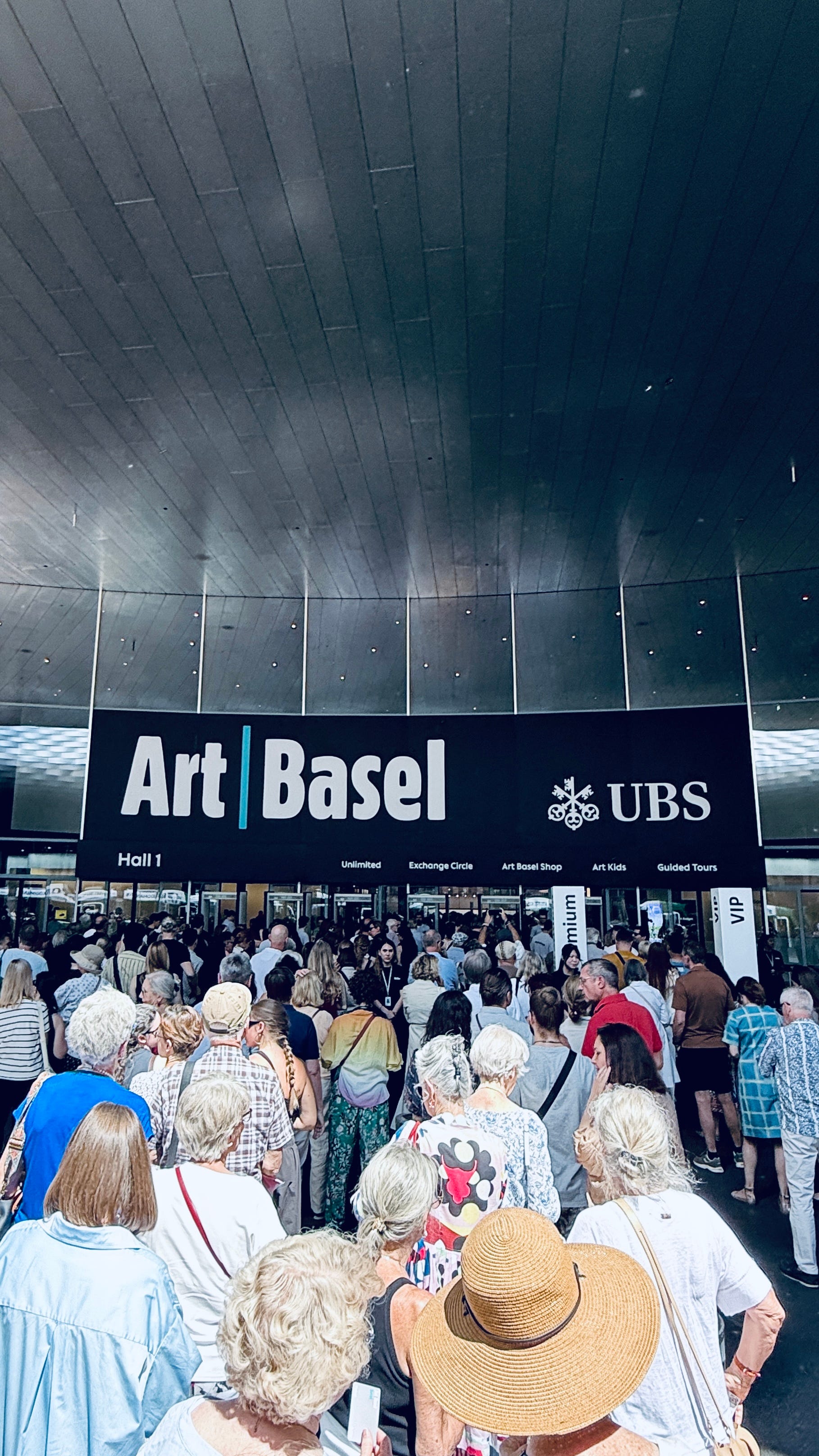
The first thing I entered was Unlimited, the section reserved for large-scale installations, works too ambitious or too massive for a conventional gallery booth.
Here, Art Basel earns its reputation without argument.
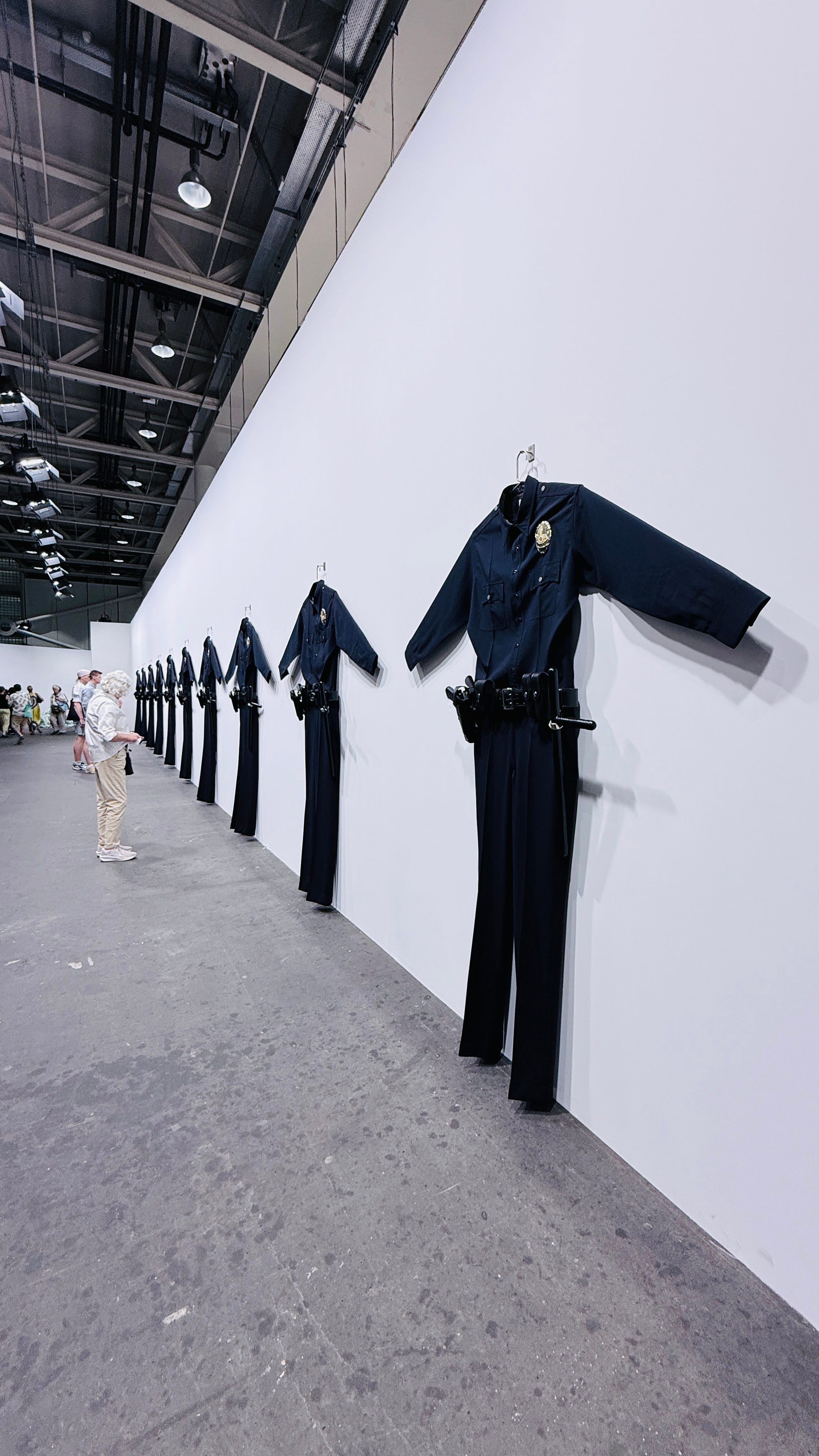
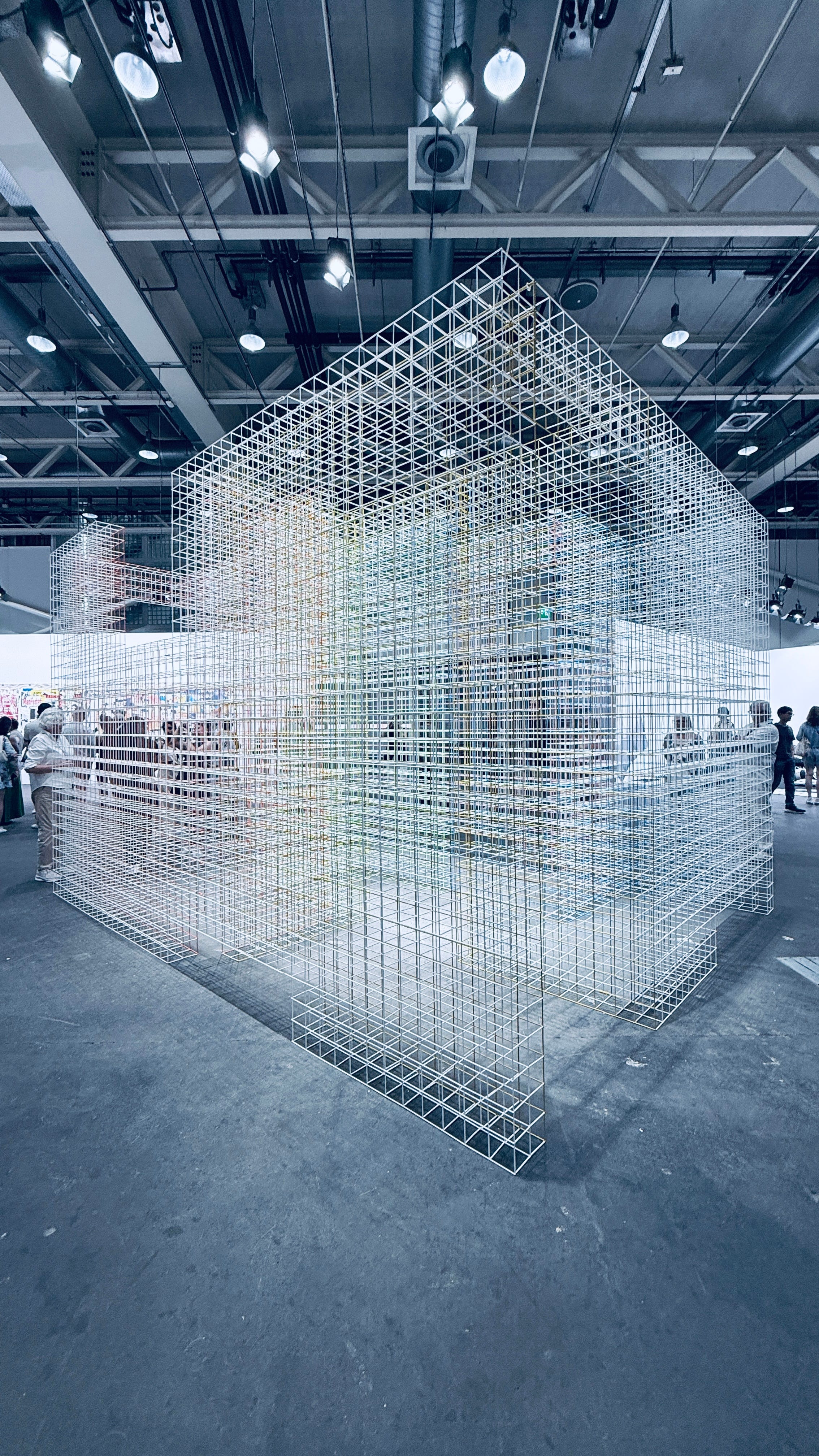
I walked through spaces that seemed to suspend time: a spiral of black steel pulling visitors inward, police uniforms hanging in a long procession along a white wall as if their wearers had simply vanished, a labyrinth of metal scaffolding so dense at its centre that the people inside slowly disappeared from view.
Standing beneath the structure, I looked up and felt small, the kind of feeling that reminds you why art exists.
I took my time.
I took notes with my eyes.
Then I went upstairs.
The galleries on the upper floor were where the business of Art Basel became visible. Paintings, sculptures, installations: works by names that needed no introduction. Every booth was immaculate. Every light carefully placed. Prices remained invisible, yet somehow seemed present in every room.
I moved slowly, looking for the frame within the frame. The small detail that quietly tells the whole story.
And then I noticed something.
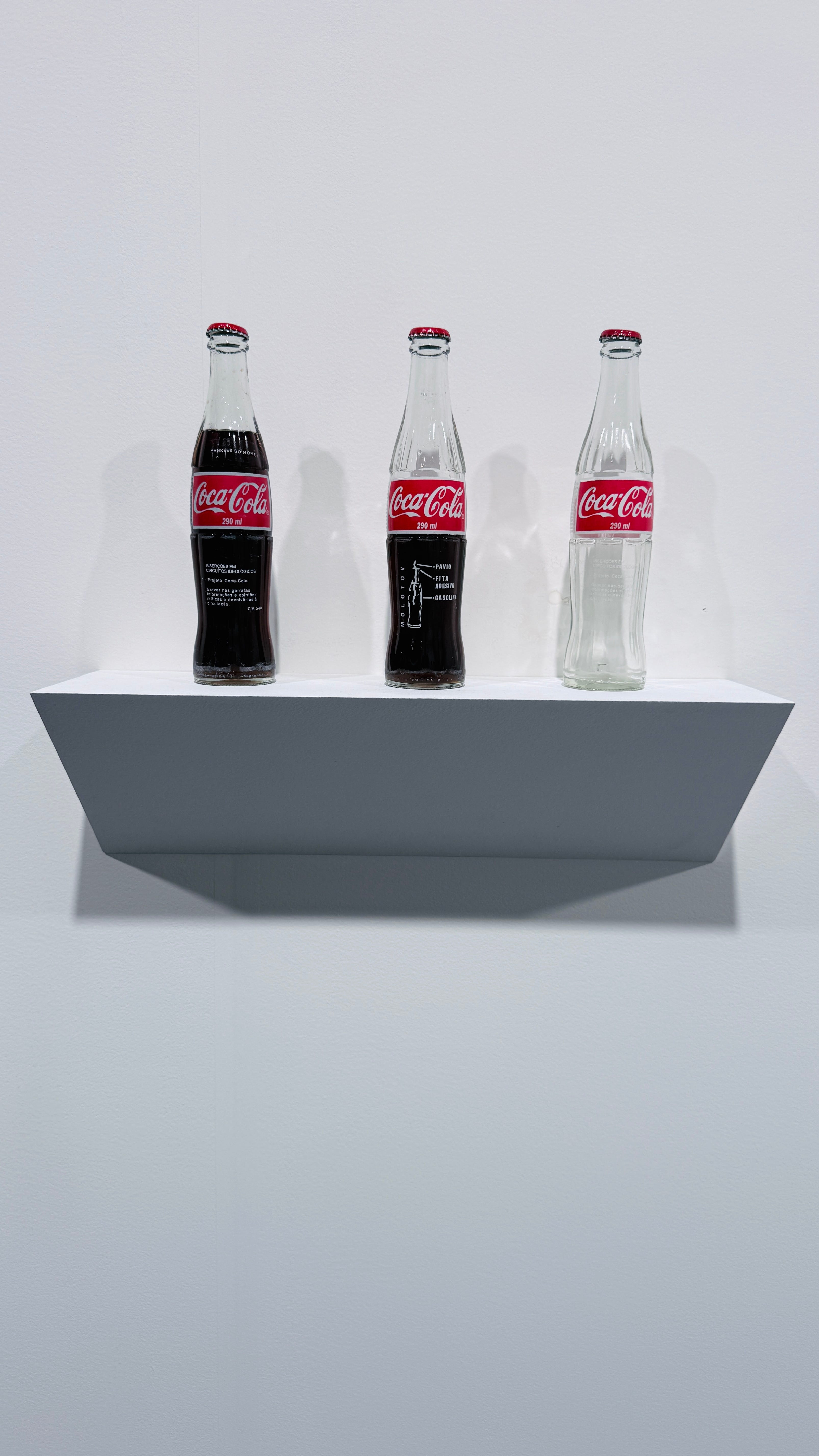
Three Coca-Cola bottles on a white shelf: full, half-empty, empty-presented as a sculptural series. Colourful chairs mounted on a wall like paintings. Eggshells clustered into a sphere. A weathered mattress, spray-painted and suspended where a canvas might have hung.
Everything, it seemed, could become art.
Fabric.
Glass.
Lamps.
Furniture.
Metal.
Even the visitors themselves.
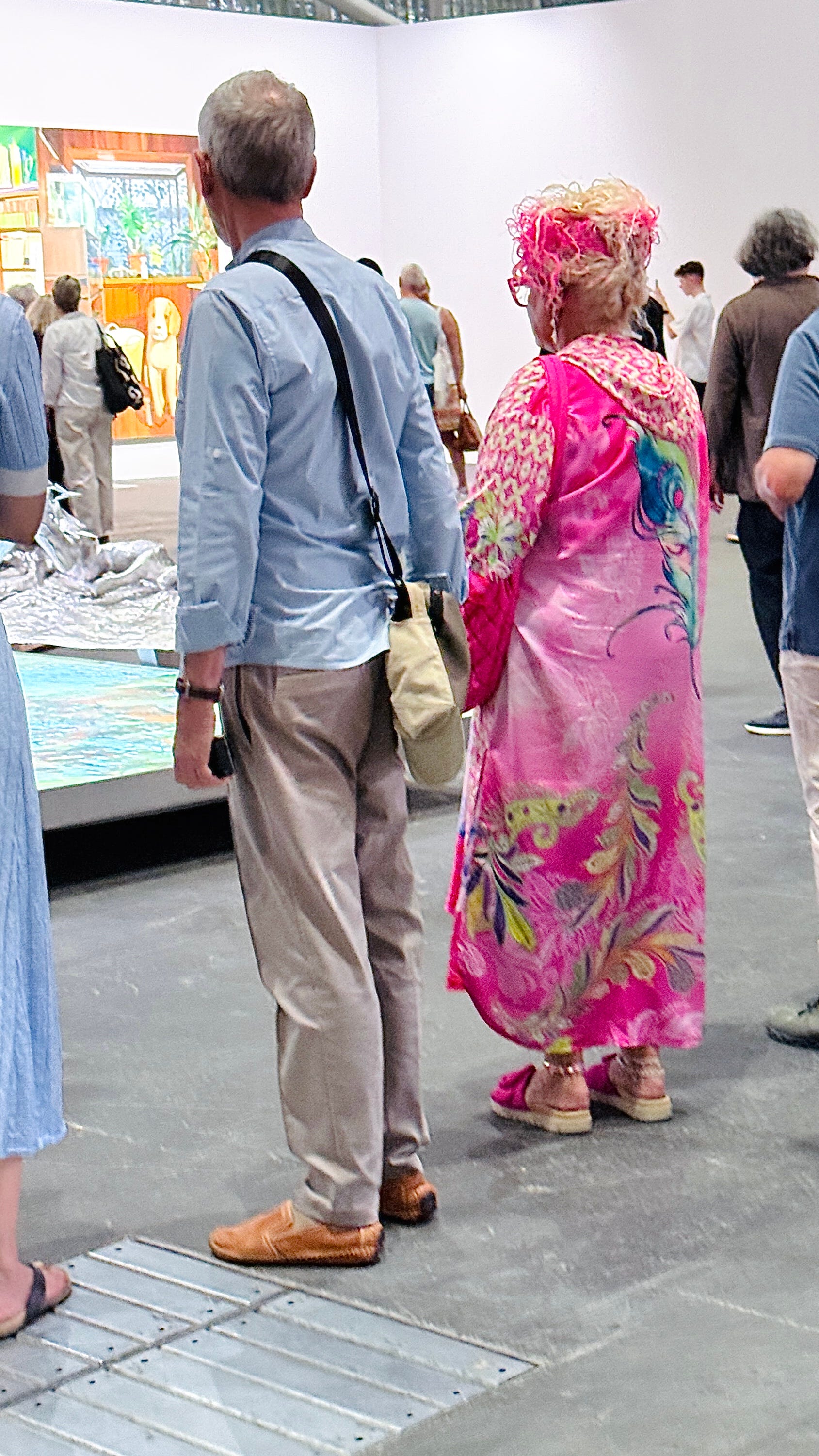
At one point I watched a woman in a floor-length pink floral gown move through the galleries and wondered, not entirely seriously, whether she was part of the exhibition.
And yet, as I continued walking, photography seemed strangely absent.
From where I stood, the medium that has shaped how the modern world sees itself occupied almost no space.
I wasn’t asking whether a particular photograph was good enough.
For the first time, I found myself asking something else:
Why did the medium itself feel almost invisible in a place that claimed to represent the very best of contemporary art?
It wasn’t disappointment.
It was something quieter.
It was the sudden realization that I had spent so many years looking at the world through one particular language that I had forgotten others might not speak it.
My way of seeing was patient, precise, always searching for the single frame that holds everything. It had no home here.
Sometimes the most interesting thing you can discover in a new place is where you yourself do not belong.
From that moment on, I stopped looking for photography.
Instead, I started looking at the fair itself.
Not as a world that had excluded me, but as a different world entirely, one with its own logic, its own hierarchies, its own definition of what deserves to endure.
I found it fascinating.
I found it strange.
And, more often than I expected, I found it genuinely moving.
Art Basel is extraordinary.
Overwhelming.
International.
Ambitious beyond measure.
It made me think differently about art, about value, and about the quiet agreements that determine what finds its place on a white wall, and what does not.
I left with more questions than answers.
But I also left with something else.
Something had shifted, quietly, in the way I think about my own work.
The next morning, I walked into Photo Basel.
For the first time that weekend, I felt I had arrived.